
Colorful balloon and streamer party decoration setup on a table

For Families

Guides sorted by age, theme, and occasion.

Whether you're filling a Tuesday afternoon or planning a full birthday celebration, start by matching the activity to the age group in the room.

Young child working on a simple paper craft with crayons at a table
Ages 3–5

Preschool activities

At this age, activities work best when they're short, forgiving of mess, and don't depend on following multi-step verbal instructions. Our guides for this range favor big shapes, thick crayons and washable paint, simple sorting or matching games, and songs that add movement between quieter tasks.

Party guides for this age typically run 60 to 90 minutes total, with several short activities rather than one long one. Checklists note nap schedules and a quiet wind-down activity near the end.


School age children reading a scavenger hunt clue card together outside
Ages 6–8

Early school-age activities

Kids in this range can read simple instructions, follow multi-step games, and work with basic tools under supervision. Guides here include scavenger hunts with written clues, relay races with clear scoring, and craft projects involving safety scissors or a hot glue gun operated by an adult.

Party frameworks for this age often include a themed craft, one active group game, and a quieter table activity to bridge into cake and gift time.

Group of tween aged children playing a strategy based party game indoors
Ages 9–12

Tween activities

This age group can handle games with strategy, team roles, and longer rule sets. Many kids this age also want some input into planning, so guides include discussion prompts parents can use when picking a theme together with their child.

Craft projects for tweens lean toward decor and personalization, such as building their own party backdrop or designing table settings, rather than simple make-and-take crafts.

Parent supervising children of different ages working together on one shared activity
Mixed-age siblings and groups

Planning for a spread of ages

Many households and school-year parties mix ages under one roof. Guides marked for mixed groups suggest a base activity with two difficulty tracks, for example a craft where younger kids trace a stencil while older kids draw freehand, so everyone works on the same theme at their own level.

The accompanying checklist for mixed groups includes a note on staggering game start times so younger children aren't waiting through long instructions meant for older kids.

Inside a planning checklist

What the companion checklist actually tracks.

Every party-format guide includes a checklist broken into stages. It's meant to be worked through over roughly four weeks, though the timeline compresses easily for a smaller gathering.

Early stage

  • Confirm the date and guest count
  • Choose the theme and venue (home, yard, or park)
  • Send invitations
  • Order or gather core supplies

Final stage

  • Prep crafts and pre-cut materials
  • Confirm food and cake plans
  • Set a game order and rough timing
  • Assign one adult per station if hosting a crowd
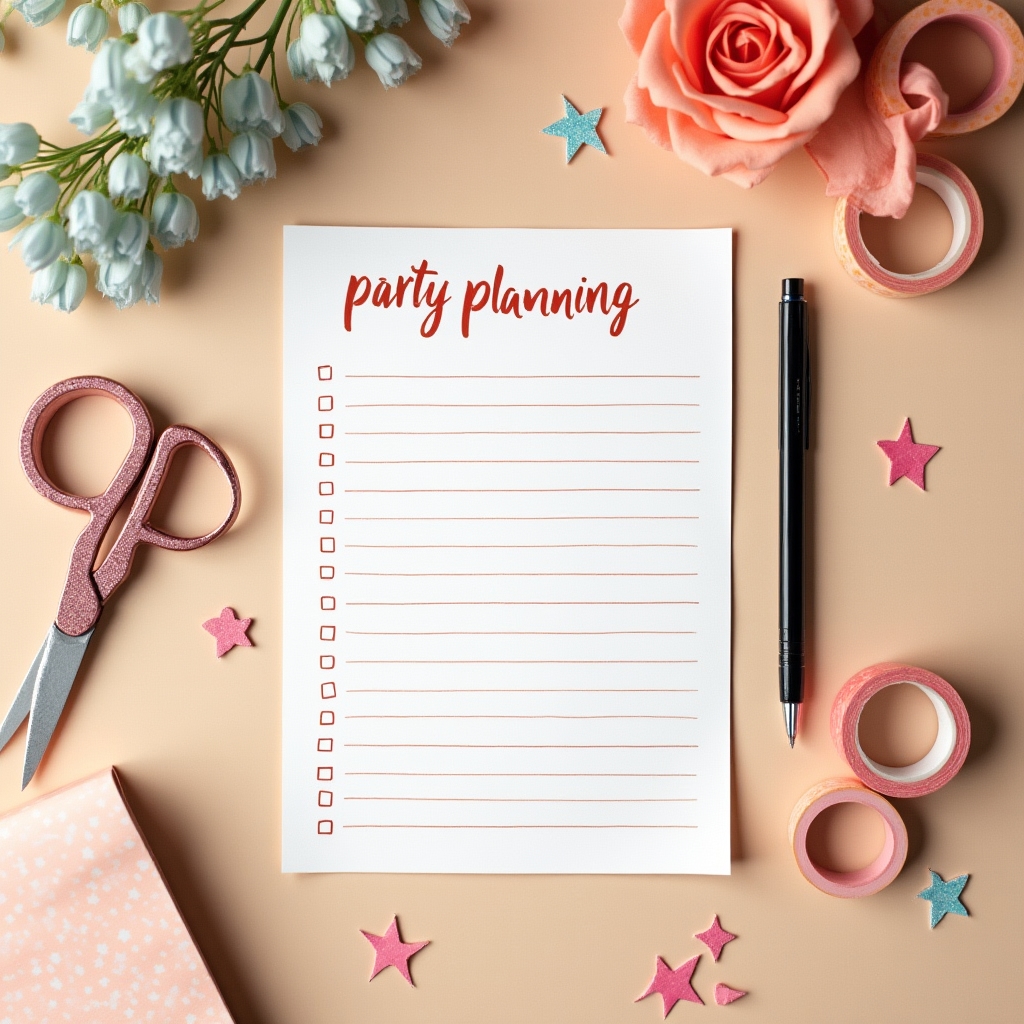
Checklist and planning notes laid out on a table with a pen and craft scissors

Monthly collections

Why a new theme arrives every month.

Kids' interests shift with school terms, seasons, and whatever show or book is popular that month. Rather than one static library, the monthly collection format keeps a rotating set of current themes in view while older themes stay searchable in the archive.

Seasonal fit

Fall collections lean into harvest and outdoor themes; winter collections shift indoors.

School calendar aware

Collections around common break weeks include longer at-home activity plans.

Nothing disappears

Past themed collections remain browsable, so a favorite theme from a prior month is still usable later.

Simple to search

Guides are tagged by age range and activity type so you can filter without reading every entry.